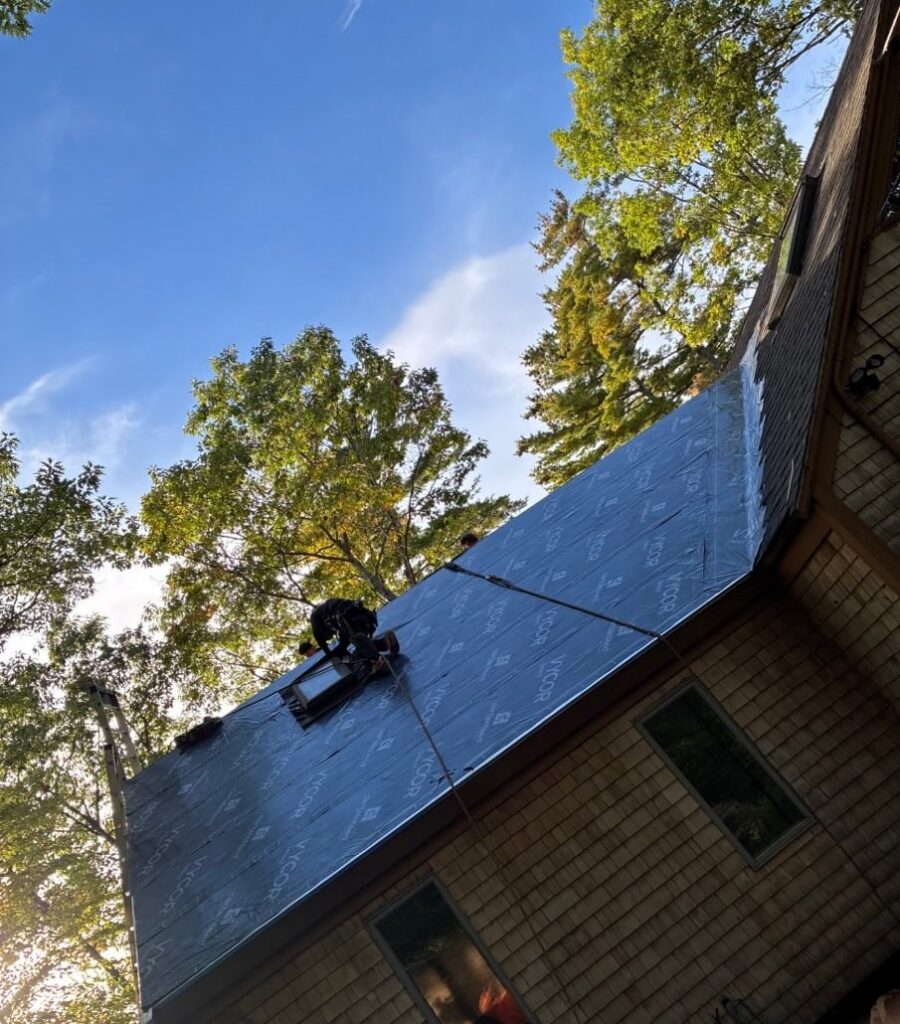
Ice & water shield is a self-adhering, rubberized membrane that goes directly on the roof deck under the shingles or metal, in the areas most likely to see water backing up. It’s one of the most important parts of a roof in New Hampshire. It’s also one of the most misunderstood.
What it does
Regular underlayment sheds water that runs downhill. Ice & water shield is designed for water that’s pushed uphill or sitting still, like meltwater pooled behind an ice dam or wind-driven rain at a valley. It sticks to the deck and seals around the nails that go through it, so water that gets past the roofing has a much harder time reaching the wood.
Where it should go
The residential building code most New Hampshire towns enforce requires an ice barrier along the eaves in areas where ice dams are a known problem, which covers essentially the whole state. It has to run from the edge of the roof to at least 24 inches inside the exterior wall line of the house. On a roof with a deep overhang or a low pitch, that often takes more than one course.
Good practice also puts it in:
- Valleys
- Along sidewalls and where the roof meets a wall
- Around chimneys, skylights and other penetrations
- On low-slope sections
Some roofs call for full coverage of the entire deck, especially low-slope roofs and certain metal systems. Your town or your shingle manufacturer may have more specific requirements, so ask your roofer what the code and the warranty call for on your house.
What it doesn’t do
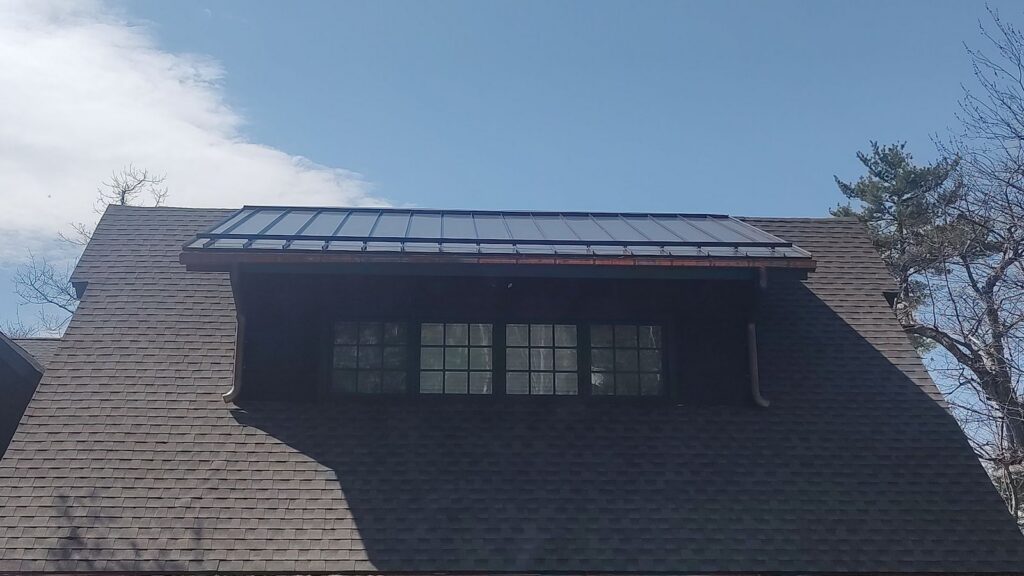
Ice & water shield is not a 100% guarantee against leaks from ice dams. This is the part homeowners are rarely told.
- If the ice dam builds past the edge of the membrane, water can back up above it and onto deck that’s only covered by regular underlayment.
- Water can find its way in at seams, at the drip edge, at a nail that wasn’t sealed, or at flashing details around walls and chimneys.
- If the attic is warm, the dams can get big enough to beat any membrane.
Think of it as a seatbelt. It makes a bad situation much less likely to turn into damage, but it doesn’t stop the crash. The crash is stopped in the attic, with air sealing, insulation and ventilation. See Ice Dams and Attic Ventilation.
What to check on your proposal
- Does it say how far up from the eave the ice & water shield will go? “Ice & water at the eaves” with no measurement doesn’t tell you much.
- Does it list valleys, walls and chimneys?
- Which product is it? Name-brand membranes from the shingle manufacturer are often required for the better warranties.
- Is it going on clean, dry deck? It doesn’t stick properly to wet or dirty wood or in very cold weather without the right product.
More on reading a quote: Reading a Roofing Proposal.