An ice dam is a ridge of ice that builds up along the edge of the roof and keeps melting snow from draining off. The water backs up behind the ice, works its way under the shingles, and shows up as a stain on your ceiling or water running down the inside of a wall. In New Hampshire they’re one of the most common causes of winter leaks.
How an ice dam forms
- Heat from the house leaks into the attic and warms the upper part of the roof deck.
- Snow on the warm part of the roof melts, even when it’s well below freezing outside.
- The meltwater runs down to the eave, which sits out past the heated wall and stays cold.
- The water refreezes at the eave. Each day it builds the ridge of ice a little higher.
- New meltwater pools behind the ice and backs up under the shingles.
The cause is a warm roof deck above a cold edge. Snow is just the fuel.
Why it happens to some houses and not others
Two houses on the same street can get the same storm, and only one gets ice dams. The difference is almost always heat loss into the attic: air leaks, thin insulation at the eaves, poor ventilation, or a heated space tucked right under the roof (finished attics, cape knee walls, cathedral ceilings). Valleys, low-slope sections and north-facing eaves are trouble spots too.
What actually fixes ice dams
Long-term fixes, in order of what usually matters most:
- Air seal the attic floor. Stop warm, moist air from getting into the attic in the first place.
- Add insulation, especially at the outer edges over the exterior walls, where it’s usually thinnest.
- Balance the ventilation so cold air can move under the whole roof deck. See Attic Ventilation.
- Install ice & water shield at the eaves and valleys when the roof is replaced. It’s an important backstop, but it isn’t a cure. See Ice & Water Shield.
Short-term options while you work on the real fix:
- Rake snow off the first few feet of roof from the ground with a roof rake.
- Heat cable along the eaves can keep a channel open on problem spots. It treats the symptom, not the cause.
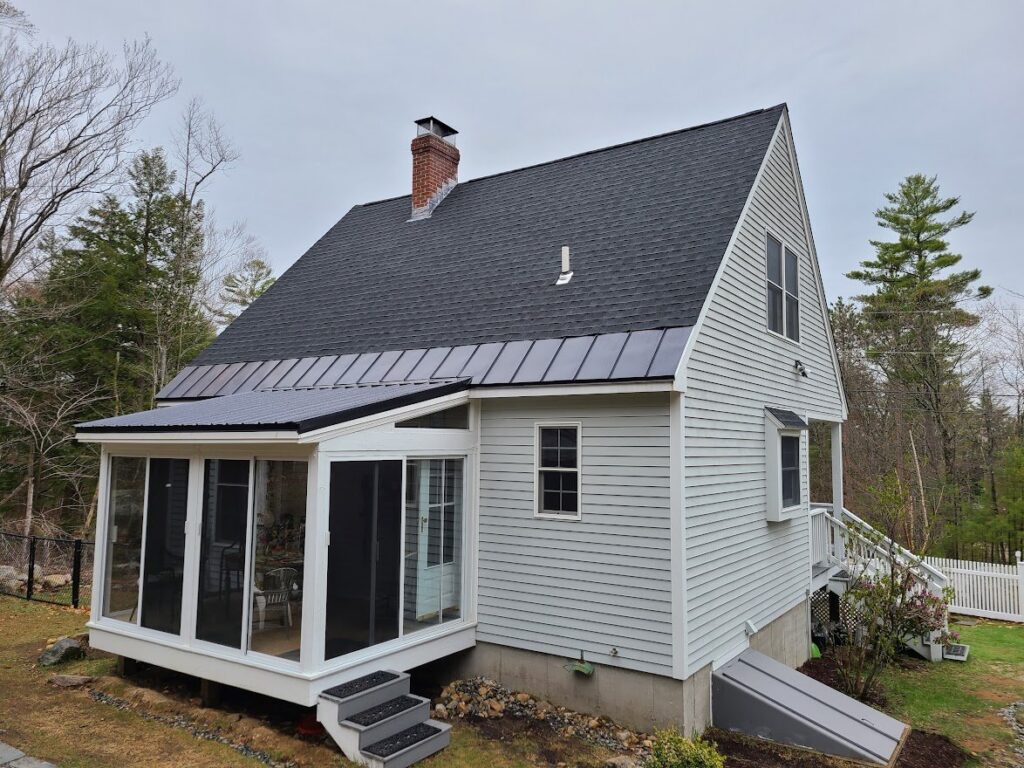
- Metal roofing or a metal eave panel sheds snow faster on some roofs. On shingle roofs a metal snow/ice belt along the eave is an option too, though it changes the look.
What not to do
- Don’t chip at the ice with a hammer, axe or shovel. You’ll damage the shingles and gutters.
- Don’t get on a snowy, icy roof yourself.
- Don’t count on a new roof alone to solve the problem. If the attic stays warm, the dams can come back on the new roof too.
If water is already coming in
Take photos, move belongings away from the leak, and call a roofer. Many companies offer ice dam steaming, which uses low-pressure steam to cut channels through the ice without damaging the roof. Avoid pressure washers. Then plan the attic work for spring so you aren’t dealing with it again next winter.